Whose keys are these?
sound composition in quad speaker setting
2025
in collaboration with Carlos Bandi, Lorian Li, Guoge Yang, Daimante Patterson, Yu Liu
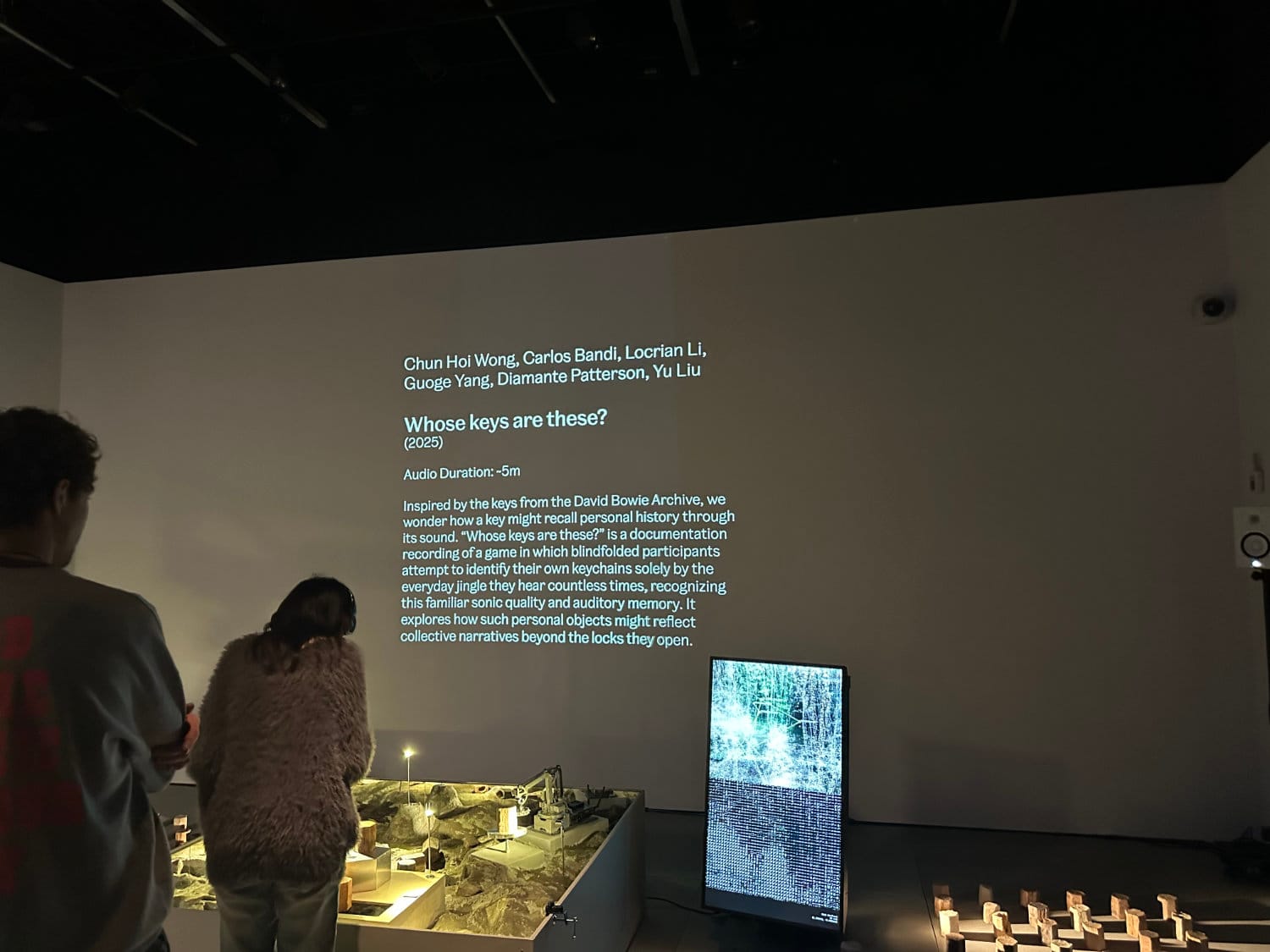
showcase @Gallery 2 @V&A East Storehouse Wednesday, 5 November 2025 – Friday, 7 November 2025 at V&A East Storehouse Part of the 17th International Symposium on Computer Music Multidisciplinary Research (CMMR 2025) , hosted in East London under the theme Sound, Music: Space, Place.
Work discription
Inspired by the keys from the David Bowie Archive, we wonder how a key might recall personal history through its sound. "Whose keys are these?" is a documentation recording of a game in which blindfolded participants attempt to identify their own keychains solely by the everyday jingle they hear countless times, recognizing this familiar sonic quality and auditory memory. It explores how such personal objects might reflect collective narratives beyond the locks they open.
How the Game is Played
- Participants: 4 to 8 players sit around a table, with one person acting as the host.
- Introduction: Players are typically not briefed on the game rules in advance. We casually ask if they have brought their keychain. If yes, they are invited to join — it's a quick, light-hearted activity lasting 5–10 minutes, and always fun.
- Setup: Each player places their key ring on the table at the host's request.
- The Rule: The host explains the single, simple rule: Claim back your own key by recognising its unique sound.
- Blindfolding: All players are then blindfolded (eyes remain closed throughout).
- The Sounding Phase: The host gathers all the key rings and produces sounds from them one by one — usually the everyday jingle when shaken, but also variations such as dropping them onto the table or floor, scraping, or other gestures — asking players to claim the key they believe is theirs.
- Claiming: Only one player can claim each key. Claims are made verbally during the process.
- Completion: Once all keys have been claimed and distributed, players remove their blindfolds and reveal whose keys ended up with whom.
- Atmosphere: Conversation and discussion are encouraged throughout — the only restriction is keeping eyes closed until the end.
Participant Reflections
The 4-channel audio documentation weaves together post-game conversations into a layered testimony — a chorus of voices reflecting on the experience. Edited clips overlap and respond to one another, turning individual thoughts into a shared sonic meditation on auditory memory, personal identity, and the quiet power of everyday sounds.
Although key sound is a universal sound, it is very unique to each person. And I really like the fact that we might not be really thinking much about that on a regular basis… This is like the sound of me coming home, but also the sound of him coming home, too… Day-to-day sounds that we naturalize and almost assume that they are part of our background, of our soundscape.
I think you're really onto something with kind of the personal… the idea that you have kind of like a personal identity within a key… In my family, we have, like, a pot of keys that are no longer used. You know, the open windows in homes that no one's lived in or gone near for decades. But there's something about having that. It becomes kind of like a tactile reminder of a time.
When we're deprived of the eyesight, we're really, like, trying to hone in on what sort of distinguishes each key… Pretty amazed by the sonic qualities or the human perception that you can recognize something really with these kind of subtle differences.
It's interesting that I myself have attached keychains that sort of relate to my ethnic identity… I think there's a sense of security there… A detonator, maybe. Something that triggers something.
Once we have door or lock, latch, we still need the key to unlock.
(~1 min 44 s excerpt from the constructed audio testimony)
Special thanks:
- Chloe Kellow (Chloe Kellow is an Assistant Curator, working on the new galleries at the V&A East Museum. She is also a PhD candidate at The Courtauld Institute of Art.)
- Rubén Salgado Pérez (Contemporary Programme Curator - Live Programme, V&A East)
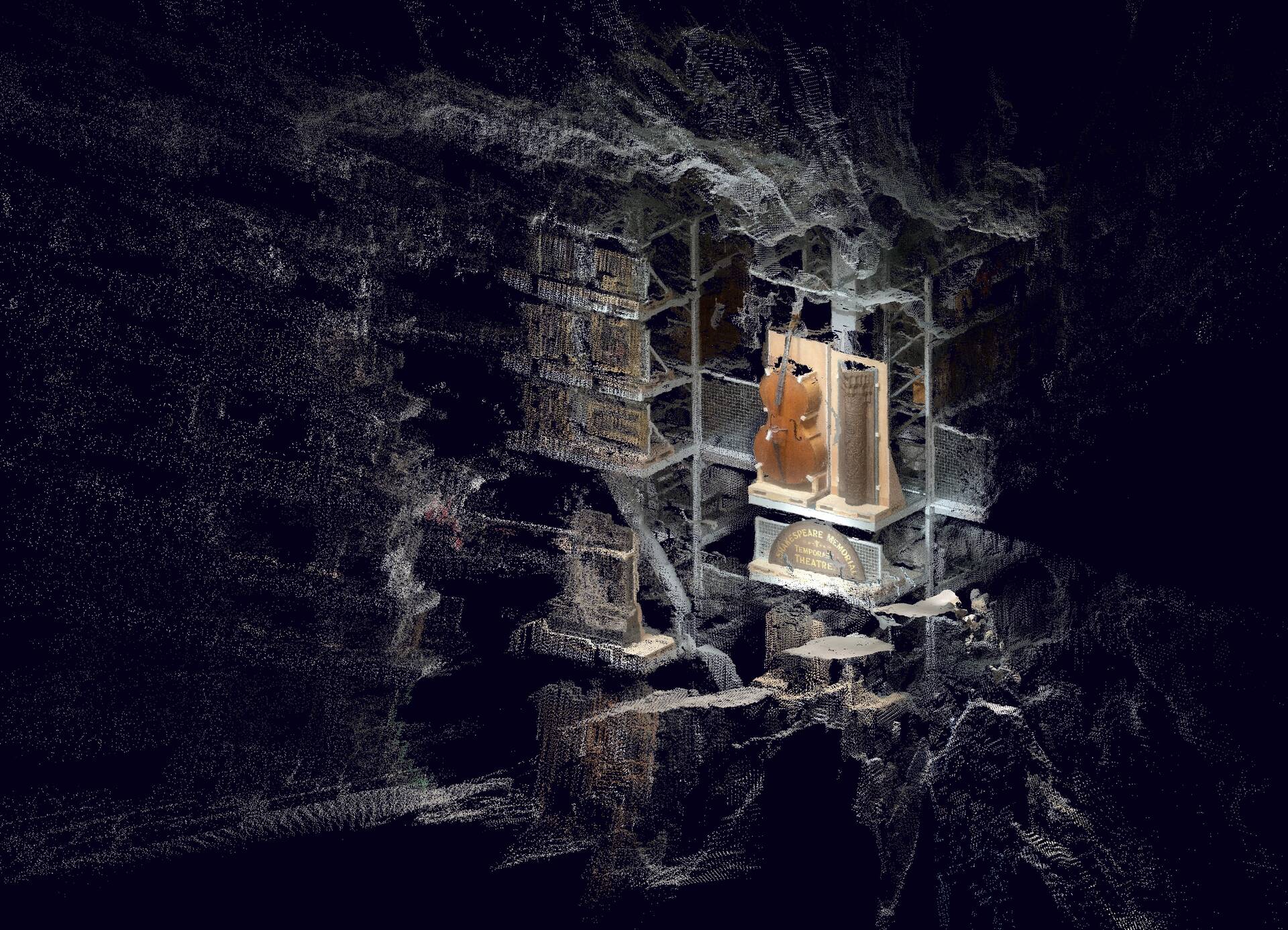
Wednesday, 5 November 2025 – Friday, 7 November 2025 at V&A East Storehouse Part of the 17th International Symposium on Computer Music Multidisciplinary Research (CMMR 2025) , hosted in East London under the theme Sound, Music: Space, Place.